Professional Rug Reweaving Services
Restore the Beauty, Strength, and Craftsmanship of Your Hand-Knotted Rug

Finding a hole, torn edge, or worn section in a treasured rug can be disappointing. Many rug owners assume a damaged rug has reached the end of its life and must be replaced. Fortunately, that is often not the case.
Professional rug reweaving is one of the most advanced forms of textile restoration available. Rather than covering damage with a patch or attempting to disguise it, reweaving rebuilds the missing structure of the rug itself using traditional hand-knotting techniques. When performed correctly, the repaired area becomes an integrated part of the rug while preserving its beauty, functionality, and craftsmanship.
At RCL, we specialize in the careful restoration of hand-knotted rugs using techniques designed to respect the original construction of each piece. Whether your rug has suffered years of wear, pet damage, moth damage, burns, missing fringe, or structural deterioration, our goal is to preserve the rug whenever restoration is the appropriate solution.
Every rug tells a story. Some have been passed through generations of a family, while others were purchased as investment pieces or collected during travels around the world. Our philosophy is simple: whenever possible, preserve the rug—not replace it.
What Is Rug Reweaving?
Rug reweaving is a specialized restoration process used to rebuild missing or damaged sections of a hand-knotted rug. Unlike basic repairs that simply reinforce loose edges or sew torn areas together, reweaving reconstructs the rug’s original woven structure by replacing damaged foundation threads and individually tying replacement knots that closely match the original design.
This process requires considerably more skill than ordinary rug repair because every replacement knot must become part of the rug’s original weave. Depending on the extent of the damage, hundreds—or even thousands—of individual knots may need to be recreated by hand.
The objective is not simply to hide the damage. Professional rug reweaving restores strength to weakened areas while preserving the original character, pattern, and craftsmanship that make hand-knotted rugs unique.
Did You Know?
Many valuable Oriental and Persian rugs contain well over 100,000 individual hand-tied knots. Some fine silk rugs contain several hundred knots per square inch, making reweaving a highly specialized craft that requires precision, patience, and extensive experience.
How Rug Reweaving Differs From Standard Rug Repair
Many rug owners use the terms rug repair and rug reweaving interchangeably. While reweaving is a type of rug repair, not every repair requires reweaving.
| General Rug Repair | Professional Rug Reweaving |
|---|---|
| Broad category of repairs | Specialized structural reconstruction |
| May include fringe repair, binding, or stitching | Rebuilds missing woven sections knot by knot |
| Often repairs existing materials | Recreates missing portions of the rug |
| Suitable for cosmetic issues | Used for structural damage and missing foundation |
| Usually faster | Requires extensive hand craftsmanship |
Because reweaving reconstructs the actual fabric of the rug, it is generally reserved for more significant damage where the original foundation has been compromised.
Why Do Rugs Need Reweaving?
Hand-knotted rugs are remarkably durable, but no textile lasts forever without care. Years of foot traffic, environmental conditions, accidents, and everyday household use gradually place stress on the rug’s fibers and foundation.
In many cases, small areas of damage begin almost unnoticed. A loose corner, thinning pile, or tiny hole can gradually expand as the rug continues to be walked on. Addressing these issues early often results in a simpler and more successful restoration.
Some of the most common reasons rug owners seek professional rug reweaving include:
- Heavy foot traffic causing worn foundation threads
- Pet chewing on corners, edges, or fringe
- Moth damage that weakens wool fibers
- Burn holes from fireplaces, candles, or cigarettes
- Furniture wear concentrated in one area
- Water damage affecting the rug’s structure
- Improper previous repairs
- Natural aging of antique rugs
While every rug is different, one thing remains consistent: the earlier structural damage is addressed, the greater the opportunity to preserve the rug’s original construction and prevent more extensive deterioration.
Signs Your Rug May Need Professional Reweaving
Not every damaged rug requires complete restoration, but certain types of wear often indicate that professional reweaving should be considered. Knowing what to look for can help prevent minor problems from becoming major repairs.
Common Types of Rug Damage We Repair Through Reweaving
Every rug experiences wear differently. Some damage develops gradually over decades of everyday use, while other problems occur suddenly because of pets, accidents, insects, or improper cleaning. The good news is that many types of structural damage can often be restored through professional rug reweaving.
Below are some of the most common conditions we see when evaluating Oriental, Persian, antique, and other hand-knotted rugs.
Hole Repair
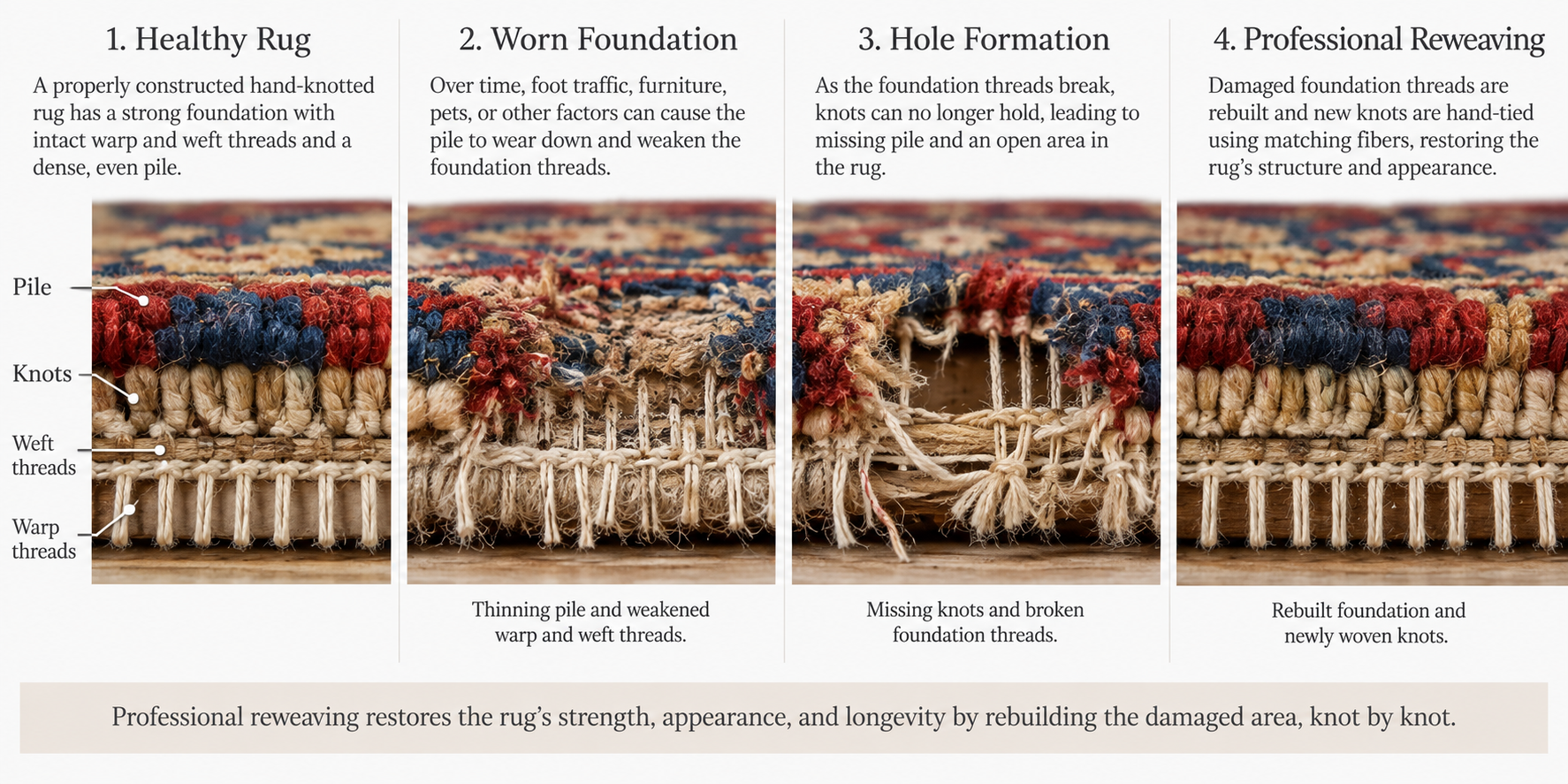
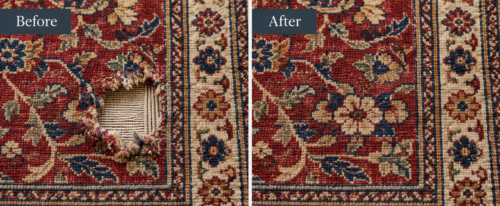
Small holes often begin as areas where the rug’s pile has worn away, exposing the underlying foundation. Continued foot traffic places additional stress on these weakened fibers until individual warp and weft threads begin breaking. Once this occurs, the opening can grow surprisingly quickly.
Professional rug reweaving reconstructs the damaged foundation before replacement knots are tied into the missing section. Rather than simply covering the hole, the repair becomes part of the rug’s woven structure, restoring both strength and appearance.
Pet Damage
Dogs and cats commonly chew fringe, corners, borders, and edges. While fringe damage may appear cosmetic at first, many rugs use the fringe as an extension of the rug’s foundation. Once pets begin chewing these structural fibers, the damage can spread into the body of the rug.
Depending on the severity, professional reweaving may include rebuilding foundation threads, recreating missing knots, and restoring decorative borders so the repaired area blends naturally with the surrounding rug.
Moth Damage
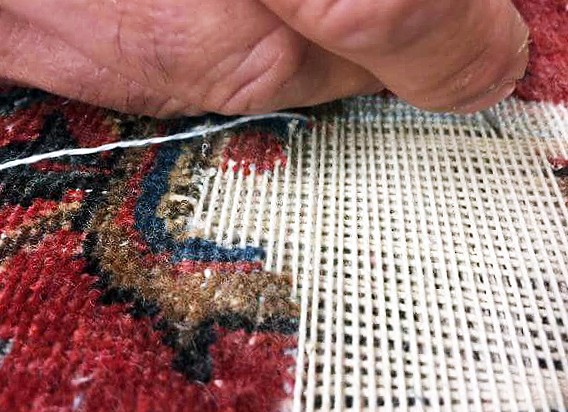
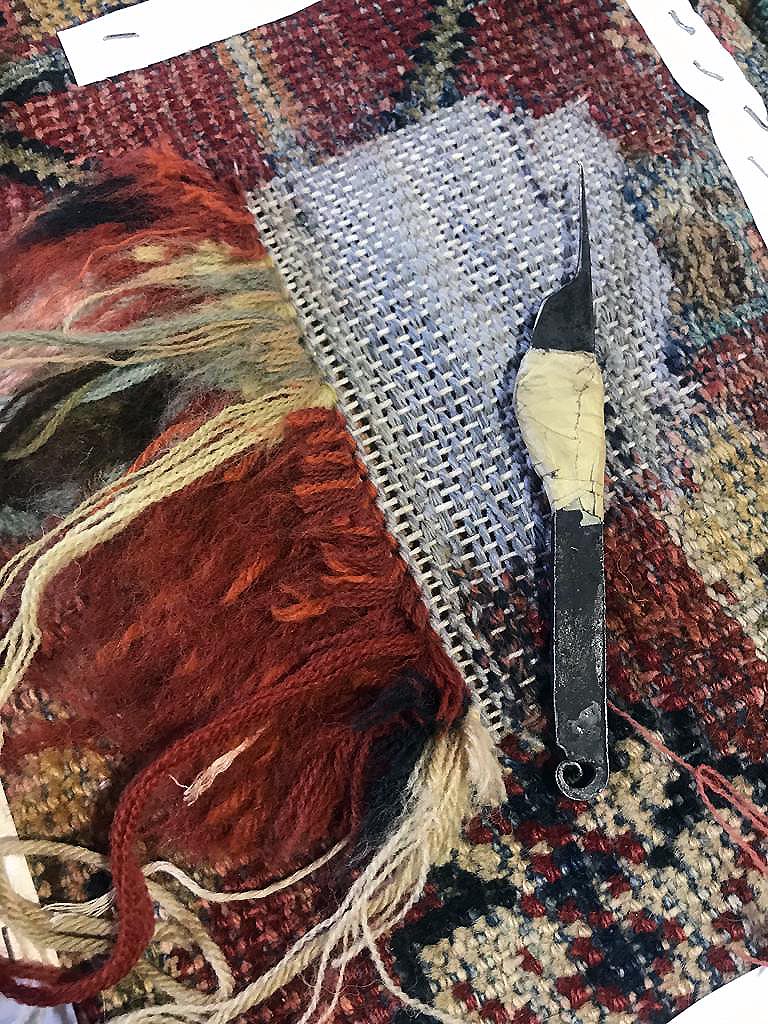
Clothes moth larvae feed on natural animal fibers such as wool and silk. Because the insects typically avoid well-traveled areas, damage often develops underneath furniture, along baseboards, or in storage where it may go unnoticed for months.
By the time visible holes appear, surrounding fibers may already be weakened. After the infestation has been addressed and the rug has been professionally cleaned, damaged areas can often be reconstructed through careful hand reweaving.

Did You Know?
Moth larvae feed on the keratin found in natural fibers—not the dirt itself. However, rugs containing dust, pet hair, skin cells, and food residue create an environment that encourages infestation.
Burn Damage
Fireplace embers, candles, cigarettes, irons, and other heat sources can permanently damage rug fibers within seconds. Even relatively small burns may weaken surrounding knots and foundation threads.
Professional reweaving removes damaged material before reconstructing the affected section using matching fibers and traditional weaving techniques. This helps restore both the structural integrity and overall appearance of the rug.
Corner & Border Reconstruction
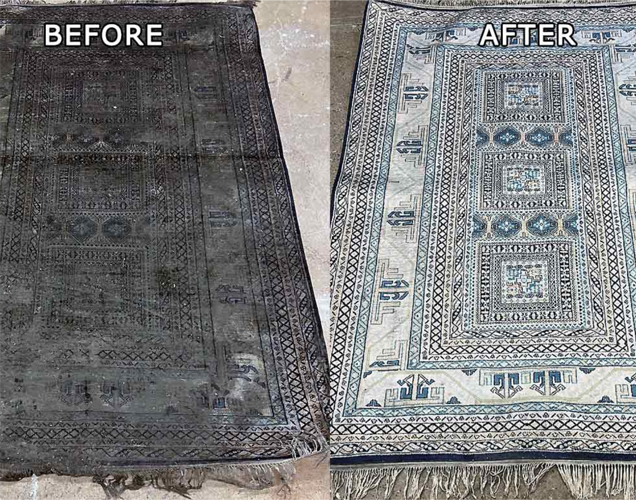
The corners of a rug absorb significant stress each time the rug is vacuumed, moved, or repositioned. Over many years, corners may begin unraveling or separating from the rest of the rug.
Decorative borders can also deteriorate from heavy traffic, furniture movement, or improper previous repairs. Because borders often contain intricate designs, reconstructing these areas requires careful attention to color, knot density, and pattern alignment.
Foundation Damage
The foundation serves as the skeleton of a hand-knotted rug. It consists primarily of warp and weft threads that support every knot throughout the rug.
When foundation threads become torn, brittle, or broken, the surrounding knots lose their support. Professional reweaving often begins by rebuilding these structural elements before new knots are added.
Why Professional Rug Reweaving Matters
Choosing professional rug reweaving is about much more than improving appearance. Proper restoration helps preserve the craftsmanship, structural integrity, and long-term value of a hand-knotted rug.
Many valuable rugs were created entirely by hand, sometimes requiring months or even years to complete. Attempting temporary repairs with adhesives, patches, or household sewing techniques may actually make future professional restoration more difficult.
Professional reweaving focuses on preserving the original construction whenever possible while stabilizing weakened areas before additional deterioration occurs.
Protects the Rug’s Structural Integrity
One damaged area places additional stress on surrounding fibers. Repairing structural damage early helps prevent small problems from becoming much larger restoration projects.
Preserves Handcrafted Beauty
Each hand-knotted rug represents countless hours of craftsmanship. Careful reweaving helps preserve the rug’s original design while maintaining its handmade character.
Helps Protect Investment Value
Many Oriental, Persian, and antique rugs represent significant financial investments. Professional restoration can often help preserve value by addressing structural issues before they worsen.
Extends the Life of the Rug
With proper care and timely repairs, many hand-knotted rugs remain functional and beautiful for generations. Reweaving is one of the most effective ways to extend the useful life of valuable rugs that have experienced localized damage.
Should You Repair or Replace?
Many rug owners are surprised to learn that replacing a quality hand-knotted rug with a comparable piece can cost considerably more than restoring the original. For heirloom, antique, or investment-quality rugs, professional reweaving is often the most practical long-term solution.
Quick Evaluation Checklist
Your rug may be a good candidate for professional reweaving if:
✓ You can see holes or missing knots
✓ Corners are unraveling
✓ Borders have begun separating
✓ Pets have chewed the fringe or edges
✓ The foundation threads are visible
✓ Damage appears to be spreading
✓ The rug has sentimental or financial value
Did You Know?
Many of the world’s finest handmade rugs were designed to last for generations. With proper cleaning, routine maintenance, and timely structural repairs, it is not uncommon for quality hand-knotted rugs to remain beautiful and functional for decades—or even more than a century.
Serving Residential and Commercial Properties
We proudly offer rug reweaving services to residents and businesses. No matter where you are, we make it easy and convenient to restore your rugs to their former glory.
Get Your Free Estimate Today
Don’t let a rug repair in need ruin the beauty of your rug. Contact us today for a free estimate and let our expert team bring new life to your cherished rug.
Call us now at: (888) 495-1105
OR COMPLETE THE FORM + GET 20% OFF ↴
Frequently Asked Questions About Rug Reweaving
Because rug reweaving is a highly specialized form of restoration, rug owners often have questions before deciding whether to repair or replace a damaged rug. Below are answers to some of the questions we hear most frequently.
Can every rug be rewoven?
No. Rug reweaving is generally reserved for hand-knotted rugs with structural damage. The condition of the foundation, the type of fibers, the extent of the damage, and the overall quality of the rug all play a role in determining whether reweaving is the appropriate solution.
During a professional evaluation, we carefully examine each rug before recommending any restoration work.
Will the repair be completely invisible?
The goal of professional reweaving is to blend the repair as naturally as possible with the surrounding rug. However, no reputable restoration specialist should promise that every repair will be completely invisible.
The final appearance depends on several factors, including the age of the rug, natural fading, wear patterns, fiber availability, and the size of the damaged area. In many cases, repairs become far less noticeable over time as the replacement fibers settle into the surrounding pile.
How long does rug reweaving take?
Every restoration project is different. A small area of missing pile may require relatively little time, while extensive reconstruction involving borders, corners, or antique rugs can require significantly more hand work.
Because every knot is tied individually, quality reweaving should never be rushed.
Can Oriental rugs be rewoven?
Yes. Many Oriental rugs are excellent candidates for professional reweaving because they are hand-knotted and built with durable natural fibers. Proper restoration helps preserve their beauty while extending their useful life.
Can Persian rugs be rewoven?
Absolutely. Persian rugs are among the most commonly rewoven rugs because of their handcrafted construction and long lifespan. When appropriate, professional reweaving helps preserve both their structural integrity and collector value.
Can antique rugs be rewoven?
Many antique rugs can be rewoven, although extra care is required due to the age of the fibers and the historical significance of the piece. Restoration methods are selected carefully to preserve as much of the original craftsmanship as possible.
Can moth damage be repaired?
Yes. After the infestation has been properly addressed and the rug has been professionally cleaned, damaged sections caused by moths can often be reconstructed through hand reweaving.
Can pet damage be repaired?
Dogs and cats frequently chew fringe, corners, and borders. Depending on the severity of the damage, these areas can often be rebuilt through a combination of structural repair and hand reweaving.
Is rug reweaving worth the cost?
For many hand-knotted Oriental, Persian, and antique rugs, professional restoration is often more economical than replacing the rug with another of similar quality. Sentimental value, craftsmanship, rarity, and replacement cost should all be considered when deciding whether to restore a rug.
Related Rug Restoration Services
Rug reweaving is just one part of comprehensive rug restoration. Depending on your rug’s condition, additional services may also be recommended.
- Rug Restoration
- Rug Fringe Repair
- Rug Binding
- Rug Resizing
- Rug Color Restoration
- Pet Damage Rug Repair
- Moth Damage Rug Repair
Our Rug Repair & Care Portfolio |